
Quick answer: Usually not. In the Caribbean, “bay leaf” often means the West Indian bay tree (Pimenta racemosa), a relative of allspice with a warm, spicy, clove-like aroma. The bay leaves in most UK supermarkets are bay laurel (Laurus nobilis), which is milder and more herbal. They are different plants.
The word bay can refer to different plants. Caribbean bay leaf and the bay laurel familiar from cooking should not be treated as automatically interchangeable ingredients simply because their common names sound alike.
Two botanical names to recognise
Kew records West Indian bay names in connection with Pimenta racemosa, while bay laurel is Laurus nobilis. These are distinct plants. The distinction explains why a common word on its own is not enough to identify the contents of a tea packet or a jar of cooking leaves.
Check the specific product
Read the full product description, ingredient list and preparation directions. For an exact botanical identity, ask the supplier if it is not provided. This general comparison does not assign a species to every product labelled Caribbean bay leaf or claim that all products using that name have identical contents.
Tea and cooking have separate instructions
A tea bag labelled for brewing and a culinary ingredient can have different product formats and intended uses. Follow the directions for the actual item. Do not swap leaves into a drink based only on their appearance or use this article as a guide to identifying plants in a garden.
Explore the K&M range
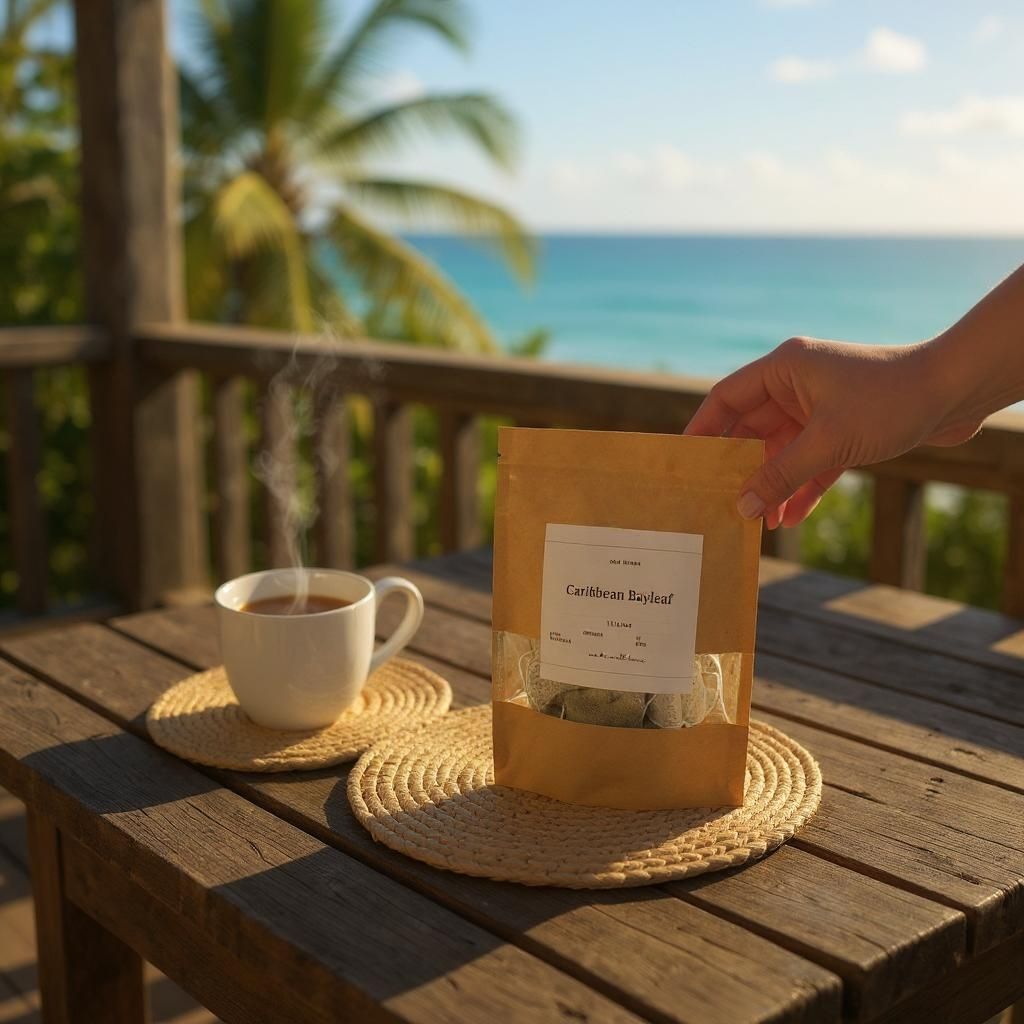
Our Caribbean Bay Leaf Teabags page introduces the product we sell. Read it alongside the existing bay leaf tea guide for product and serving information. Keeping the full name in your tasting notes makes it easier to remember what you tried and distinguish it from other bay-labelled products.
Further reading: Kew plant-name records.
The two bay leaves side by side
| Caribbean (West Indian) bay | Cooking bay laurel | |
|---|---|---|
| Plant | Pimenta racemosa | Laurus nobilis |
| Related to | Allspice and clove | Avocado and cinnamon family (laurel family) |
| Aroma | Warm, spicy, clove-like | Mild, herbal, slightly floral |
| Common use | Bush tea, soups, stews, cocoa tea | Soups, stews, sauces |
Can you swap one for the other?
Not one for one. Caribbean bay is much more aromatic, so a recipe written for bay laurel can taste very different. For tea, use a product made for tea and follow its instructions. If you’re not sure which bay a product contains, check the ingredients or ask the seller.
How to brew Caribbean bay leaf tea
- Use one bag per mug and freshly boiled water.
- Cover the mug so the spicy aroma stays in.
- Brew for 5 minutes, then remove the bag.
- Add honey, a splash of milk or a cinnamon stick if you like.
Caribbean bay in cooking
In Caribbean kitchens, West Indian bay leaves flavour soups, stews, rice and porridge. Some families also add a leaf to cocoa tea. Because it’s strong, one leaf is often enough for a whole pot.
Buying the right bay
Supermarket “bay leaves” are almost always bay laurel. If you want the Caribbean flavour, look for products that say West Indian bay or name Pimenta racemosa, or buy from a Caribbean shop.
Frequently asked questions
What does Caribbean bay leaf tea taste like?
Warm, aromatic and gently spicy, a little like allspice or clove.
Is Caribbean bay leaf the same as bay rum?
Bay rum is a fragrance traditionally made from the leaves of the same West Indian bay tree. It is not a drink.
Is bay leaf tea caffeine-free?
Yes, bay leaf tea is naturally caffeine-free.
Can I add milk to bay leaf tea?
Yes. Its warm, spicy flavour works well with milk and a little honey.
Can I use a cooking bay leaf to make tea?
Bay laurel tea is different and much milder. For the Caribbean flavour, use West Indian bay.
Shop the teas in this article
- Caribbean Bay Leaf Teabags – £8
- Turmeric tea bags – £8