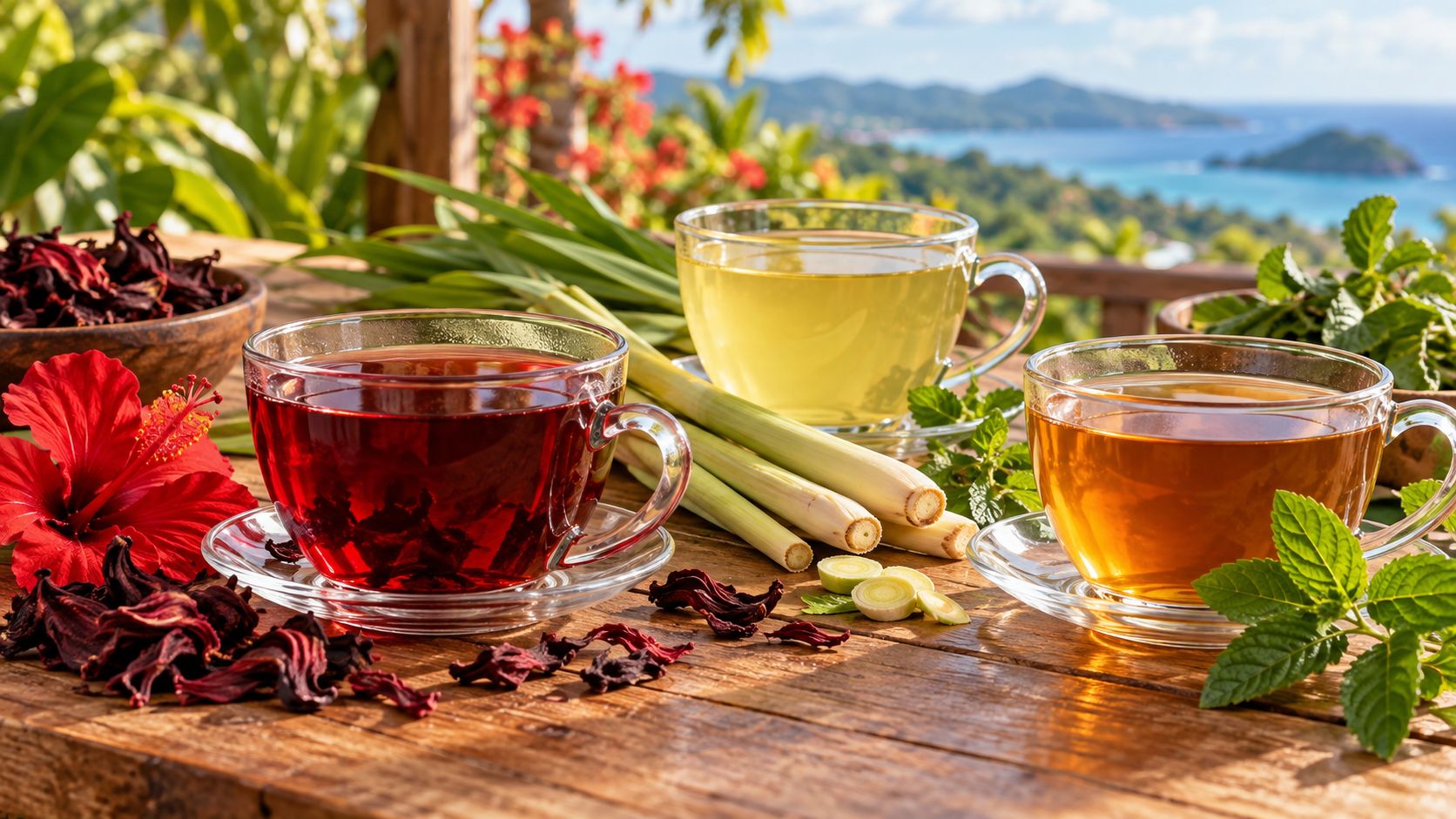
The history of tea in the Caribbean includes more than imported black tea. It also includes bush tea: drinks prepared from herbs and other plants, with knowledge shared through families and communities. To understand Caribbean tea culture, it helps to recognise these different strands rather than treating every island as having the same story.
What is Caribbean bush tea?
Bush tea is a familiar term for plant-based preparations in parts of the Caribbean. Leaves, stems and other ingredients may be used, depending on the plant and local tradition. A bush tea is not necessarily made from the tea plant, Camellia sinensis, which gives us black and green tea. The word “tea” can describe the way a drink is prepared as well as its ingredient.
Indigenous and African knowledge
Writing about Barbadian artist Annalee Davis’s bush tea project, Janice Cheddie describes a meeting of African and Indigenous knowledge, preserved through oral traditions. This history includes the botanical knowledge of enslaved people and the continuing importance of identifying and preparing plants. It deserves to be remembered as a history of people and expertise, as well as flavours.
Plants, movement and colonial history
Caribbean plant traditions developed amid colonisation, forced migration and the movement of plants. In her 1949 study of Barbados bush teas, Iris Bayley recorded plants introduced from several regions and described preparations that varied across the island. Her account also shows why historical uses should not be treated as proof of modern health benefits.
A tradition recorded in Barbados
Bayley documented collectors bringing plants from the countryside to Bridgetown markets. This is one island’s record, rather than a complete account of Caribbean tea. It nevertheless offers a glimpse of how plant knowledge, local trade and everyday preparations were connected. Family stories and island-specific records add detail that a single general history cannot capture.
Bush tea in contemporary culture
In 2016, Davis brought bush tea into an art installation in London. Blue vervain, fever grass, cerasee and West Indian bay leaf were among the ingredients used. The work connected a present-day tea service with questions about Caribbean land and colonial history, showing that a cup can carry cultural meaning alongside taste.
Exploring Caribbean tea today
For a reader discovering the tradition, a useful starting point is one named ingredient and its preparation instructions. K&M Herbs offers a way to explore Caribbean herbal teas through its current range. You can also read our story to understand our connection with Grenada. Learning the names of the plants and listening to the stories around them can make an ordinary tea break more interesting.
Further reading
Historical background: Janice Cheddie on Annalee Davis’s bush tea project and Iris Bayley’s 1949 study, reproduced by BajanThings. These sources discuss cultural history; they are not preparation instructions or evidence for treatment claims.
Keep exploring
Read our Grenadian Herbal Tea: From Grenada to London for more ideas.
For another introduction to our range, download the free K&M Herbs herbal tea and wellness book.