
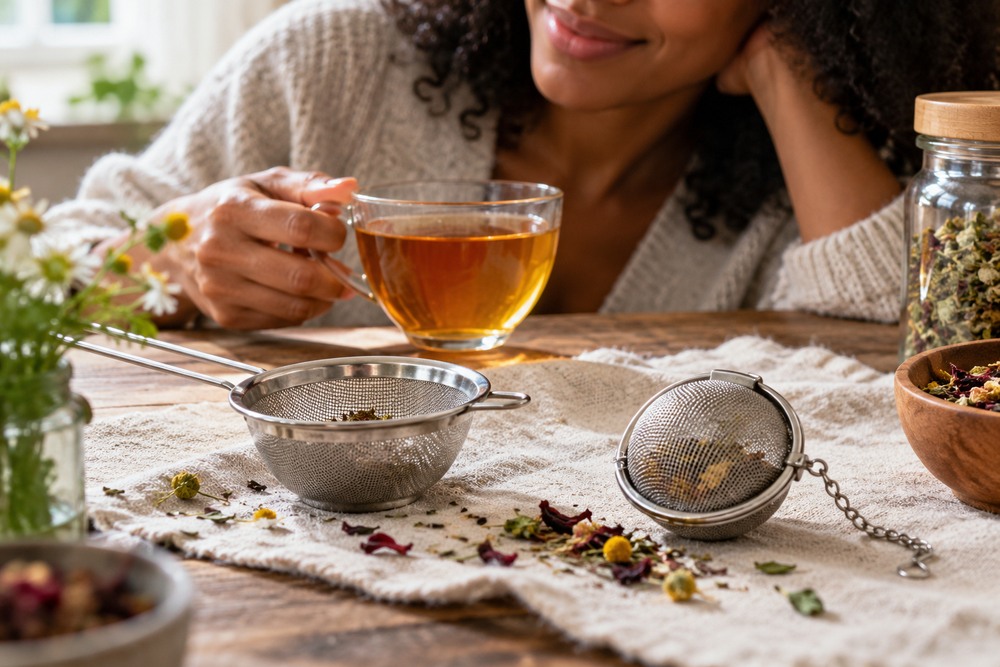
Tea bags changed the practical work of making tea. A measured portion could be brewed and removed without emptying loose leaves from a pot, making a single cup easier to prepare at home or at work.
Convenience changed the routine
With loose tea, a drinker needs some way to separate the leaves from the finished cup. A bag encloses the ingredient during brewing. That can reduce preparation and clearing-up, although the product still needs suitable water, space and brewing time.
This convenience also made it easier for different people at one table to choose different ingredients. One person can have a leaf infusion while another chooses hibiscus without preparing a separate full pot for each.
Adoption took time
Tea bags developed commercially in the early twentieth century and became much more familiar in Britain during the 1950s. Their success was gradual rather than every household changing overnight.
The frequently repeated story about merchant Thomas Sullivan's sample bags is part of that history, but the wider development also involved changing materials and commercial production. A convenient format still needed to become a repeatable product.
The choice today
A bag is a brewing format, not a complete description of quality or ingredients. A carefully chosen bag and a carefully chosen loose product can both have a place in the cupboard. Read what is inside and prepare it as directed.
The format also creates packaging questions that loose tea may handle differently. Filter materials, outer wrappers and disposal routes are worth checking separately.
When choosing your next packet, consider the routine you want: a quick individual cup, several small tastings or a shared pot. That is where the practical legacy of the tea bag is easiest to see.
Related reading: Herbal Tea Bags vs Loose Leaf: What’s the Difference?.
Further reading: The history of the tea bag.
Explore our free Herbal Tea Wellness Guide for more about K&M Herbs. For a product question, contact us.