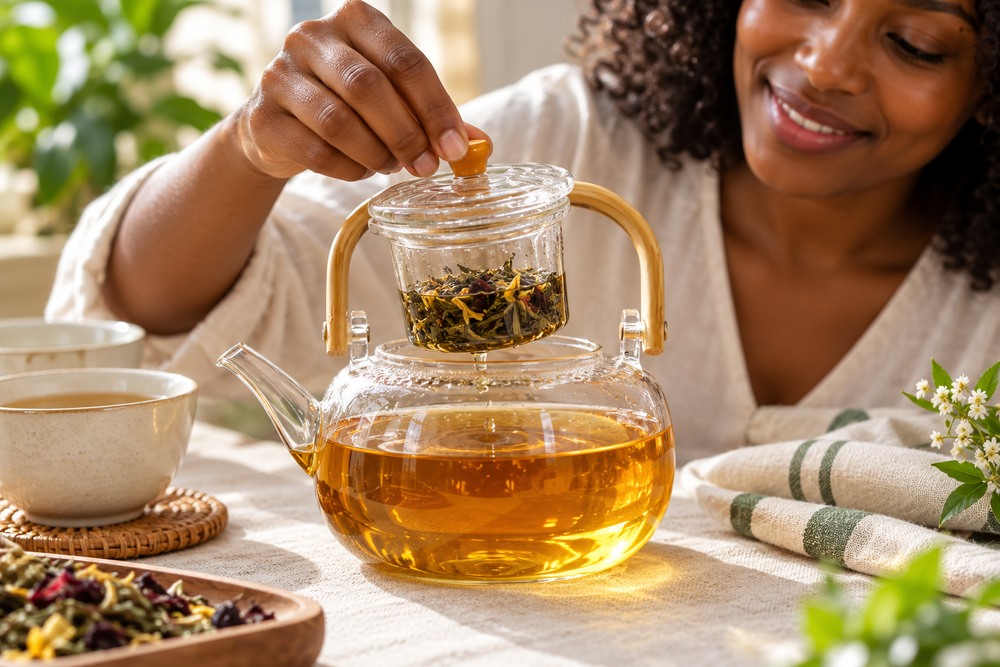
Examining brewed leaves is one part of tea assessment. Once an ingredient has absorbed water, its shape, size and colour can look quite different from the dry product. Professionals consider those observations alongside aroma and taste rather than treating a photograph as a complete quality test.
Look at what opened during brewing
A tightly shaped traditional tea may unfold into larger pieces. Other products contain intentionally smaller material. Note whether the appearance matches the product description and processing style, rather than expecting every tea to reveal an intact leaf.
Use good light and a plain plate or saucer. Let the wet ingredients cool before handling them, and keep the product name beside the sample.
Record what you can actually see
Useful observations include leaf size, the range of colours and the presence of stems or other declared plant parts. For a blend, the appearance may reflect several ingredients. A red flower-based infusion should not be judged by the same visual expectations as a green leaf tea.
Avoid turning an observation into an unsupported conclusion. Small pieces do not automatically mean poor quality, and an attractive whole leaf does not prove a flavour you will enjoy.
Connect appearance with the cup
Write your visual notes after recording the brewed aroma and flavour. Then compare the two sets of observations. You may find that a modest-looking ingredient makes a favourite cup, or that dramatic-looking leaves are simply not your preference.
This differs from ordinary tasting notes because the wet ingredient itself is the focus. It is a useful way to learn about the product you bought, provided the final judgement still includes preparation, taste and the information supplied with it.
Related reading: Does Darker Herbal Tea Always Taste Stronger?.
Explore our free Herbal Tea Wellness Guide for more about K&M Herbs. For a product question, contact us.