
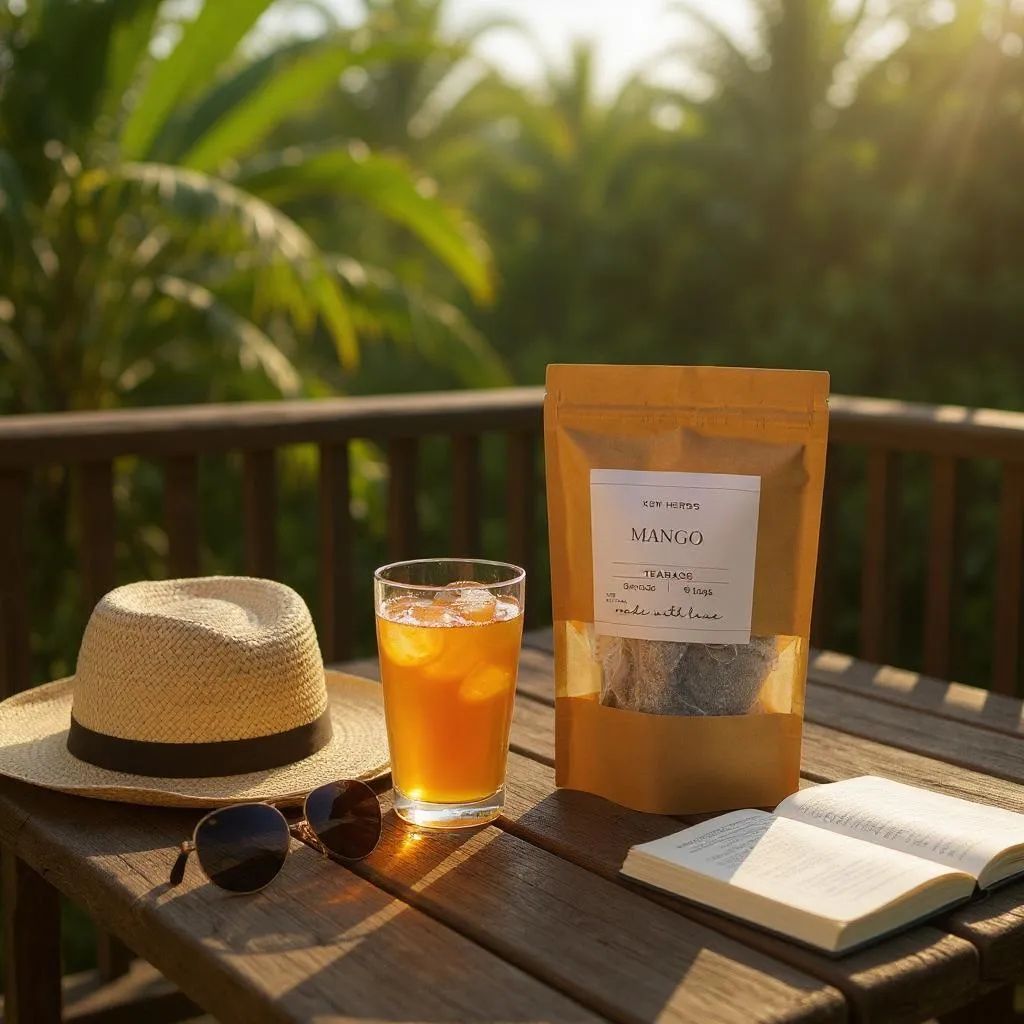
Coconut desserts can be creamy, toasted, sweet or quite light. A herbal tea pairing works best when you decide which part of the dessert you want to echo or contrast, rather than treating all coconut dishes as identical.
A citrus-like contrast
Lemongrass tea is one option to try beside coconut rice pudding or a coconut biscuit. Its citrus-like character can offer a different direction from the dessert's richness. Prepare it normally first; a very concentrated cup may dominate instead of complementing.
Taste the pudding or biscuit alone, then take a sip. If the dessert is heavily sweetened, the unsweetened tea may seem different from when you drink it by itself.
A tart contrast
Hibiscus can be interesting with a simple coconut dessert because tartness changes the balance. Try a small portion before planning a whole menu. A richly iced coconut cake and a lightly sweet coconut yoghurt bowl may need different pairings.
Keep fruit toppings separate for the first taste. Pineapple, berries or citrus can become the strongest flavour in the combination, making it harder to notice what the tea is doing.
A quieter pairing
An earthy or gently leafy infusion offers another experiment if you do not want a strongly fruity contrast. Choose from clearly labelled teas you already enjoy rather than buying solely on a promise that one pairing is perfect.
For a relaxed tasting, serve one coconut dessert with two small teas. Ask which combination you would choose for a full portion. Personal preference is useful information: there is no need to describe the result in specialist language or persuade everyone at the table to agree.
Related reading: Christmas Breakfast Recipe: Coconut and Nutmeg Porridge.
Explore our free Herbal Tea Wellness Guide for more about K&M Herbs. For a product question, contact us.