
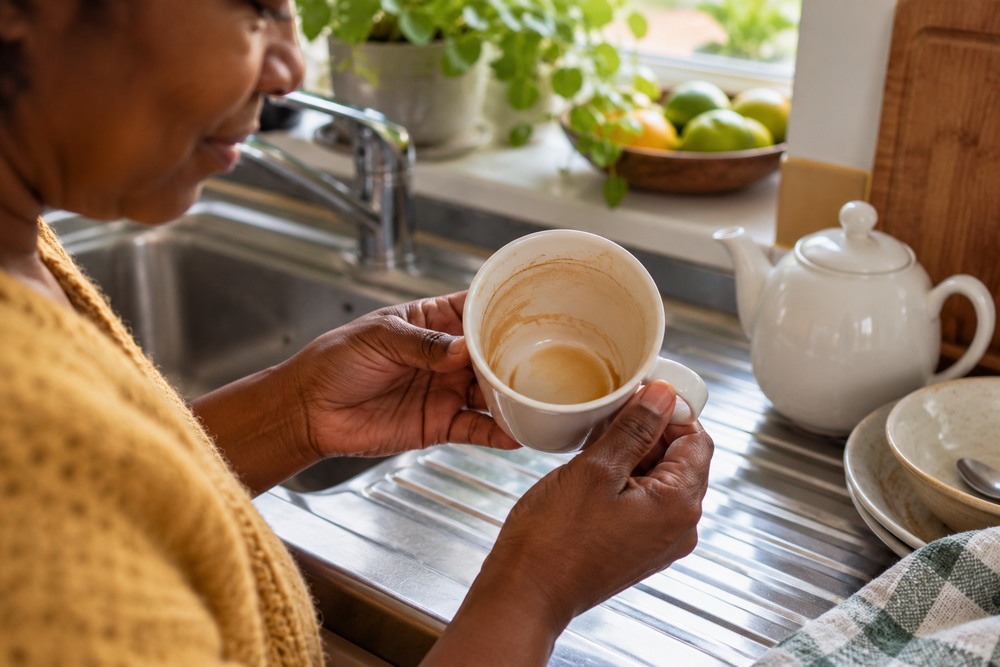
Quick answer: To remove tea stains from a mug, make a paste of bicarbonate of soda and a little water, rub it over the stain with a soft cloth or sponge, then rinse. For a teapot, fill it with hot water and 2 tablespoons of bicarbonate of soda, leave it for an hour, then wash and rinse. Check the care instructions for your mug or teapot first.
Why tea leaves stains
Tea contains natural coloured compounds that cling to surfaces, especially if a cup is left to dry with tea in it. Minerals in hard water make it worse by forming a film that traps the colour. Strongly coloured herbal teas, like hibiscus and turmeric, can stain too. See why hibiscus tea is red.
How to remove tea stains from mugs and cups
| Method | How | Good for |
|---|---|---|
| Bicarbonate of soda paste | Mix with a few drops of water, rub gently, rinse | Most ceramic mugs |
| Bicarbonate of soda soak | 1 tablespoon in a mug of hot water, leave 30 minutes | Stubborn stains |
| White vinegar | Fill the mug with equal parts warm water and vinegar, leave 30 minutes | Hard-water film and limescale |
| Denture cleaning tablet | Drop one in a mug of warm water, leave as the pack says | Deep, old stains |
Rinse well after every method, then wash as normal. Don’t mix vinegar and bicarbonate of soda in the same step, they cancel each other out.
How to clean a stained teapot
- Empty and rinse the teapot.
- Fill it with hot water and add 2 tablespoons of bicarbonate of soda.
- Leave it for an hour, or overnight for heavy stains.
- Clean the spout with a bottle brush or pipe cleaner.
- Wash with washing-up liquid and rinse well.
For glass teapots, avoid scouring pads that can scratch. For stainless steel, wipe with the grain and dry it straight away to avoid water marks.
How to clean a tea-stained flask or infuser
Fill the flask with hot water and a spoonful of bicarbonate of soda, close it, shake gently and leave for an hour. Soak infusers and strainers the same way, then scrub with a soft brush. See what is a tea flask for more care tips.
How to stop tea stains coming back
- Rinse cups straight after drinking, before the tea dries.
- Don’t leave tea standing in mugs or teapots overnight.
- Use filtered water if you live in a hard-water area.
- Give mugs a quick bicarbonate of soda clean once a week.
Cleaning by material
| Material | Best method | Avoid |
|---|---|---|
| Glazed ceramic mugs | Bicarbonate of soda paste or soak | Harsh scouring pads on decorated mugs |
| Glass teapots and cups | Bicarbonate soak, soft sponge | Abrasive pads that scratch |
| Stainless steel | Bicarbonate soak, wipe with the grain | Bleach and steel wool |
| Plastic travel cups | Bicarbonate soak | Very hot water if not heat-safe |
Always follow the maker’s care instructions, especially for dishwasher use.
Frequently asked questions
What removes tea stains from mugs?
Bicarbonate of soda is the easiest: rub a paste over the stain or soak the mug in hot water with a spoonful mixed in.
Does vinegar remove tea stains?
It helps, especially with hard-water film. Soak the cup in equal parts warm water and white vinegar, then rinse.
How do I get tea stains out of a teapot spout?
Soak the pot in hot water with bicarbonate of soda, then clean the spout with a bottle brush or pipe cleaner.
Can hibiscus tea stain?
Yes, its deep red colour can stain cups and fabric. Rinse cups soon after use.
Shop the teas in this article
- Glass Tea Pot – £35
- Flasks – £15
- Hibiscus Tea Bags – £8