
Quick answer: Blue vervain tea tastes earthy and noticeably bitter, with a dry, herbal finish. It’s closer to a strong green herb than a floral tea. Many people find it an acquired taste, so start with a short brew and add honey or lemon if you like.
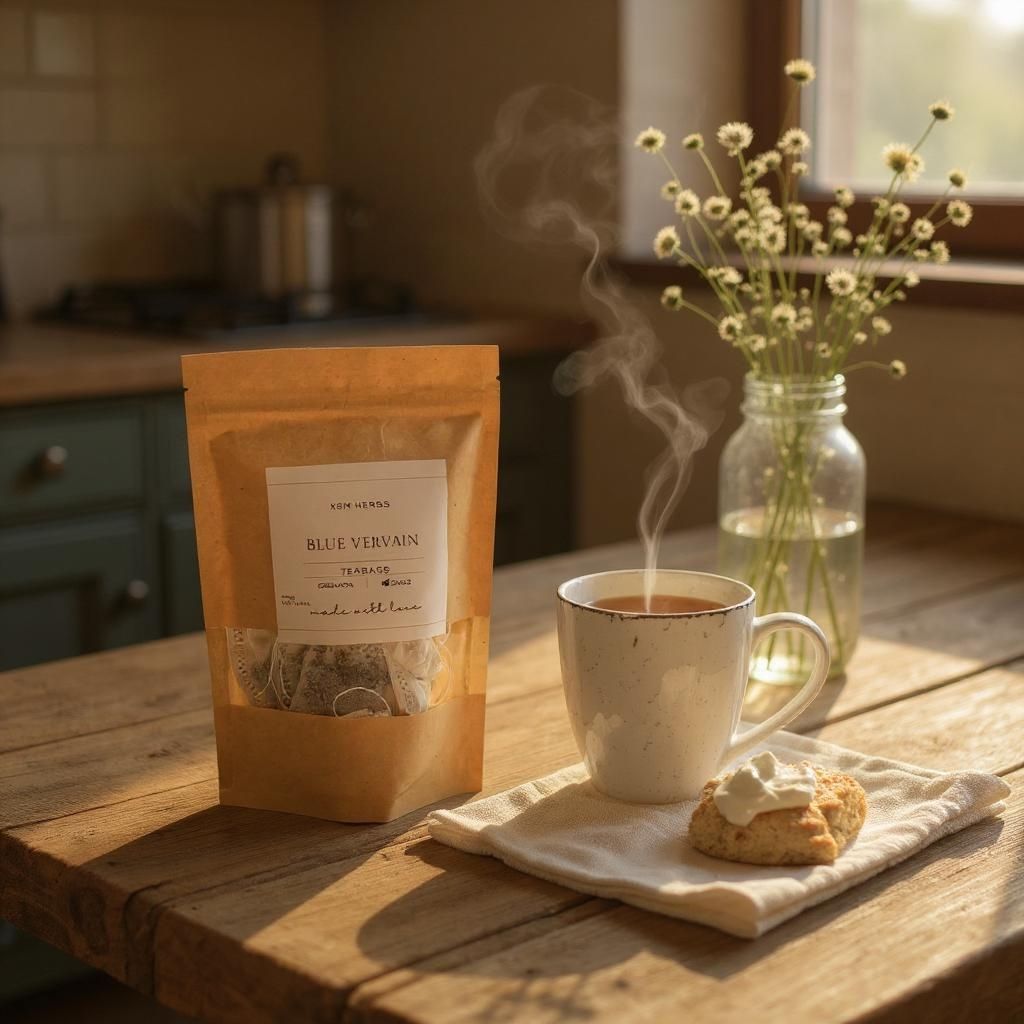
What does blue vervain taste like? There is no substitute for trying the specific tea you are buying. Its preparation, strength and your own preferences all affect how you experience the cup.
Start with the exact product
Products using similar plant names may not contain identical ingredients. Read the label before comparing descriptions online. K&M’s Blue Vervain Herbal Teabags give you a named product and preparation directions to start from.
Taste a properly prepared cup
Brew according to the packet. Use a clean mug, fresh water and a timer. Let the tea cool to a comfortable temperature, then try it plain. This gives you a clearer impression than adding sugar or mixing it with another tea immediately.
Notice more than the first sip
Think about the aroma, the first taste and the flavour left afterwards. Do you notice a stronger or lighter character than expected? Your own notes are useful, even if they do not match somebody else’s description. Avoid assuming that colour tells you how strong a tea will taste.
Compare one change at a time
If you want to try a different strength, follow the directions and change only one part of your method. Keep the same cup and water quantity where possible. The separate blue vervain product page introduces the practical preparation steps.
Explore K&M Herbs
Find your next cup in our range. For a broader introduction, read Herbal Tea: Explore the Flavours.
How to soften the flavour
- Brew it for less time – try 3 to 4 minutes before going longer.
- Use more water – one bag in a large mug gives a lighter cup.
- Add honey – it balances the bitterness without hiding the herb.
- Add lemon or ginger – brightness and warmth make it easier to drink.
- Blend it – a lemongrass bag in the same pot adds a fresh citrus note.
- Serve it iced – cold tea can taste less bitter.
Blue vervain or black sage?
If blue vervain is too bitter for you, black sage is another Caribbean herbal tea with a different character. Compare the two in blue vervain vs black sage, or read our black sage tea guide.
How to brew blue vervain tea
- Use one bag per mug and freshly boiled water.
- Cover the mug and brew for 3 to 4 minutes for your first cup.
- Taste it. If you’d like it stronger, brew longer next time.
- Add honey, lemon or ginger if you want to soften it.
Why some herbs taste bitter
Bitterness comes from natural compounds in the plant. Many traditional bush teas are bitter, and people who grew up with them often enjoy that taste. If you’re new to it, start with a lighter cup and build up.
A word about the name
“Vervain” is used for more than one plant. In the Caribbean, the vervain used for bush tea is often a different plant from the vervain found in European herb books. Check the ingredients on the product you buy. Our Blue Vervain Herbal Teabags page has the details.
Who might enjoy it
If you like bitter drinks, such as dark chocolate, strong black coffee or tonic water, you may well enjoy blue vervain. If not, black sage or lemongrass may suit you better.
Frequently asked questions
Is blue vervain tea bitter?
Yes, it has a noticeable bitter edge. A shorter brew and a little honey make it gentler.
Is blue vervain tea caffeine-free?
Yes, blue vervain is a herb and contains no caffeine.
How long should I brew blue vervain tea?
Start with 3 to 4 minutes, taste, and follow the directions on the packet.
Can I drink blue vervain tea iced?
Yes. Cold tea often tastes less bitter, so it’s a good way to try it.
What goes well with blue vervain?
Honey, lemon, ginger, or a lemongrass bag in the same pot.
Shop the teas in this article
- Blue Vervain Herbal Teabags – £8
- Black Sage Teabags – £8
- Lemongrass tea bags – £8