Quick answer: Herbal teas are grouped by the part of the plant they come from: leaves (peppermint, lemongrass, moringa), flowers (chamomile, hibiscus, lavender), roots (ginger, turmeric, dandelion root) and bark or seeds (cinnamon, fennel). Fifteen popular examples are below, with how each tastes. Most are naturally caffeine-free.
15 types of herbal tea
| Herbal tea | Part of the plant | Tastes |
|---|---|---|
| Chamomile | Flowers | Soft, floral, apple-like |
| Peppermint | Leaves | Cool, fresh, strong mint |
| Spearmint | Leaves | Sweeter, gentler mint |
| Ginger | Root | Warm, peppery, spicy |
| Hibiscus | Calyces | Tart, fruity, ruby red |
| Rooibos | Leaves and stems | Earthy, woody, hint of vanilla |
| Lemongrass | Stalks and leaves | Fresh, citrusy |
| Soursop leaf | Leaves | Mild, earthy, slightly sweet |
| Caribbean bay leaf | Leaves | Warm, spicy, clove-like |
| Moringa | Leaves | Green, grassy |
| Turmeric | Root | Earthy, warm, golden |
| Lemon balm | Leaves | Soft lemon and mint |
| Lavender | Flowers | Very floral |
| Fennel | Seeds | Sweet, aniseed-like |
| Rosehip | Fruit | Tangy, fruity |
Leaf teas
Leaf teas are the biggest group. They usually brew in about 5 minutes and range from fresh and minty to green and grassy. Caribbean bush teas such as soursop, bay leaf, moringa, guava and mango leaf belong here. Read what bush tea means.
Flower teas
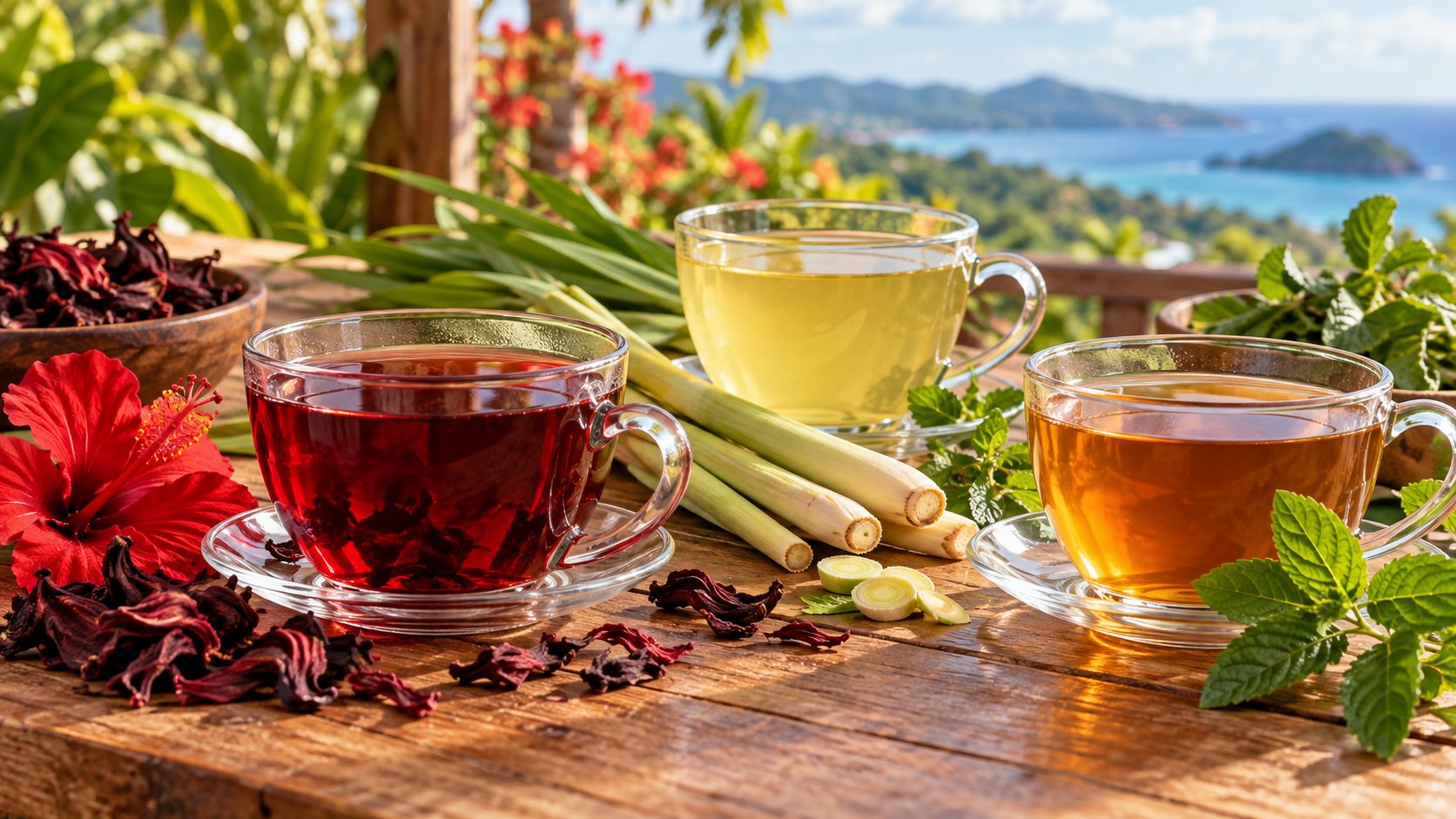
Flower teas, like chamomile, hibiscus and lavender, are often fragrant and colourful. Hibiscus is technically the calyx around the flower, which gives its deep red colour. See what part of hibiscus is used for tea.
Root and bark teas
Roots and bark, like ginger, turmeric and cinnamon, are tough, so they often need simmering rather than just steeping. That’s called a decoction. Read infusion vs decoction and how to make ginger tea.
Seed and fruit teas
Fennel and aniseed give sweet, liquorice-like flavours. Fruit teas, such as rosehip or dried apple, are tangy and sweet. Check fruit-flavoured teas for added flavourings or black tea.
Which type should you try first?
For an easy start, try a bright tea like lemongrass or hibiscus. If you prefer something warming, try bay leaf or turmeric. For more detail, see types of herbal infusions: leaf, flower and root.
Caribbean herbal teas
Caribbean bush teas are a family of their own. They’re usually made from leaves picked locally and include lemongrass (fever grass), soursop, bay leaf, moringa, guava leaf, mango leaf and avocado leaf. Many families still make them fresh from the garden. K&M Herbs brings them to the UK from Grenada.
How to brew most herbal teas
- Use one bag or 1–2 teaspoons of loose herbs per mug.
- Pour on freshly boiled water.
- Cover and brew for about 5 minutes (roots may need longer).
- Taste, then add honey, lemon or milk if you like.
How to store them
Keep herbal teas sealed, away from heat, light and steam, and use them before the best-before date.
Hot or iced?
Almost every herbal tea can be served iced. Brew it a little stronger, let it cool, then pour it over ice. Hibiscus, lemongrass, peppermint and rooibos are especially good cold. See how to make iced tea.
Mixing types
Leaf, flower and root teas can be combined. A bright leaf tea with a warm root tea, such as lemongrass and ginger, is a good start. See how to mix herbal teas.
Frequently asked questions
What are some examples of herbal teas?
Chamomile, peppermint, ginger, hibiscus, rooibos, lemongrass, soursop leaf, bay leaf, moringa and turmeric.
Which tea is herbal?
Any tea made from a plant other than the tea plant, Camellia sinensis. Green and black tea are not herbal.
Are all herbal teas caffeine-free?
Most are. A few, like yerba mate, contain caffeine, and some blends include black or green tea.
Shop the teas in this article
- Lemongrass tea bags – £8
- Hibiscus Tea Bags – £8
- Soursop Leaf Teabags – £8
- Caribbean Bay Leaf Teabags – £8
- Moringa tea bags – £8
- Gift Pack – £14.80