Many herbal infusions are naturally caffeine-free, but the words “herbal tea” alone are not enough to confirm what is in a particular blend. The ingredient list and the product’s own caffeine information are the best starting points.
Why ingredients matter
Traditional black and green tea contain the tea plant, Camellia sinensis, which naturally contains caffeine. Many infusions use other ingredients instead. A product can combine herbs with black or green tea, so a herbal-sounding name does not automatically mean the finished blend is caffeine-free.
Caffeine-free and decaffeinated
These terms describe different things. Decaffeinated tea starts with tea that contains caffeine and undergoes a process to remove much of it. A naturally caffeine-free infusion uses ingredients that do not naturally supply caffeine. Read the wording on the product instead of treating the two descriptions as interchangeable.
A quick packet check
- Read the full ingredient list.
- Look for an explicit caffeine statement.
- Check whether black or green tea is included.
- Ask about the specific product if the information is unclear.
Choosing from the K&M range
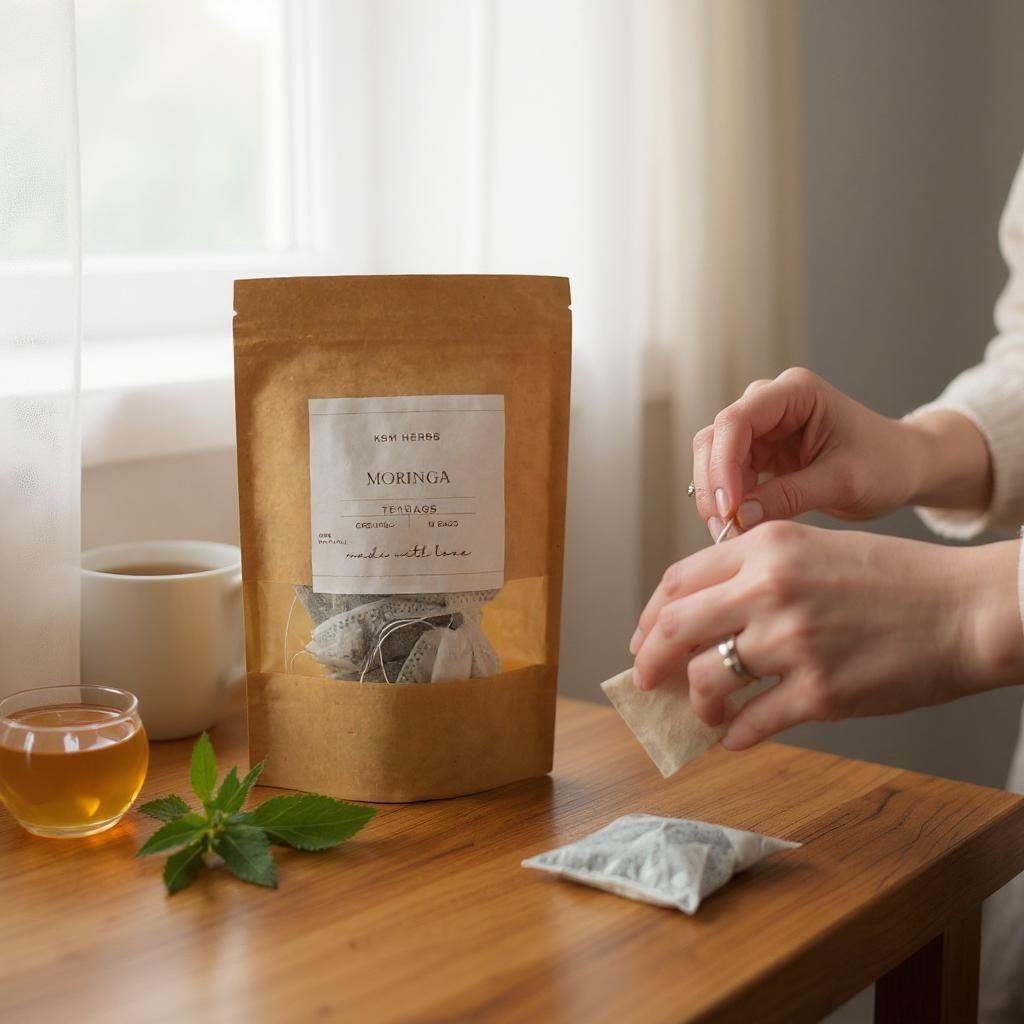
Browse the tea that interests you, including our moringa tea bags, and check the current details before ordering. If caffeine content is an essential part of your choice, contact us about that product rather than relying on a general statement about herbal tea. The UK Tea & Infusions Association also explains why many infusions differ from traditional tea.
Keep exploring
Read our Moringa Tea Bags: A Simple Brewing Guide for more ideas.
For another introduction to our range, download the free K&M Herbs herbal tea and wellness book.