Quick answer: Herbal tea smells of the plant it’s made from. Lemongrass smells fresh and citrusy, hibiscus fruity and tart, bay leaf warm and clove-like, and soursop and moringa green and earthy. The aroma comes from natural oils released by hot water, and much of what we “taste” is actually smell.
What herbal tea smells like depends on its ingredients and preparation. Dry tea in the packet and the brewed drink can offer different impressions, so there is no single herbal-tea fragrance.
Start with the dry ingredients
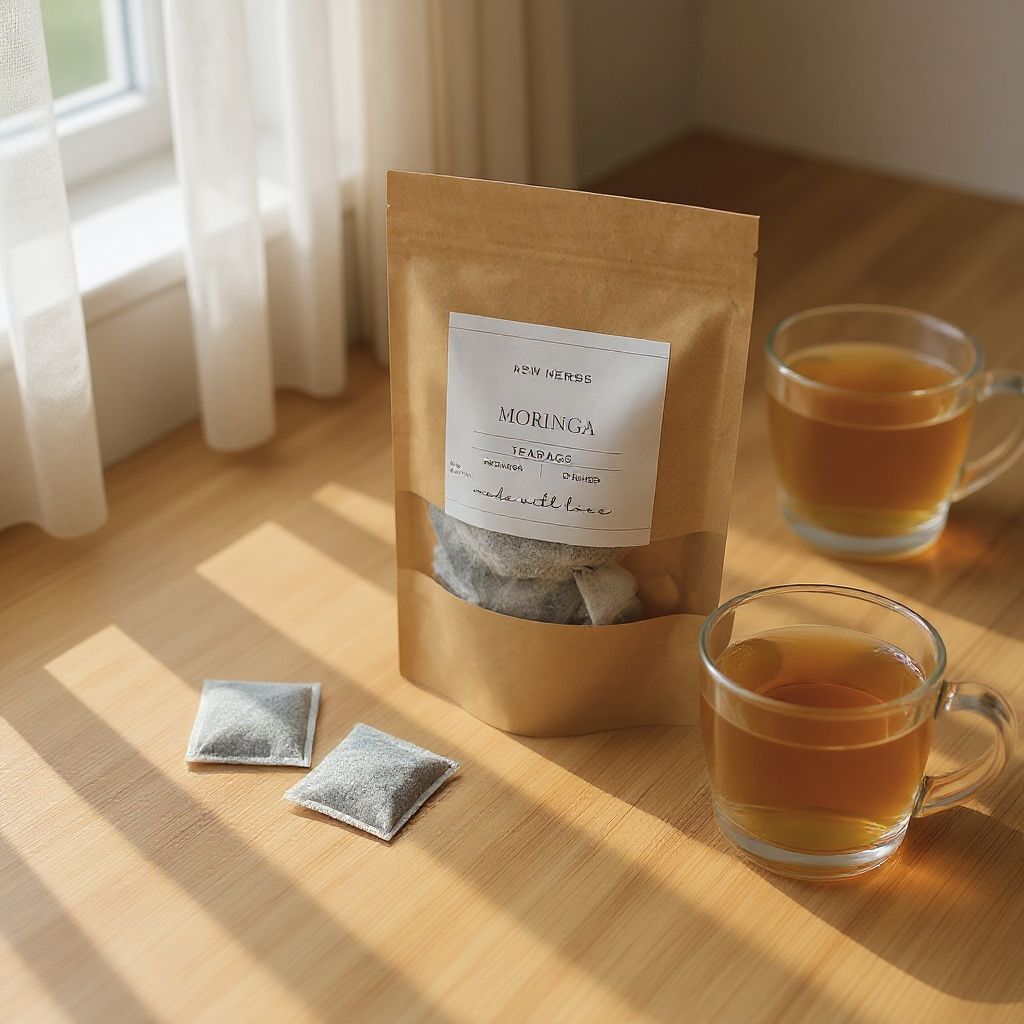
A leaf tea, a flower infusion and a spice blend need not smell alike. The ingredient list gives context for what you notice. Packaging scent, storage and the presence of other ingredients can also complicate a quick first impression.
Notice the brewed aroma
Preparing the tea changes the way you encounter the ingredients: now there is a warm drink rather than dry plant material. Describe the aroma in your own words. Leafy, floral or citrus-like are possible tasting descriptions, not guarantees that every tea will fit them.
Smell and taste are related observations
The aroma of a packet does not predict every feature of the finished flavour. A cup may seem more subtle, more tart or simply different from the first smell. Keep separate notes for the dry tea, the brewed aroma and the taste if you enjoy comparisons.
Compare named teas
Trying moringa beside another leaf tea creates a more specific question than asking what all herbal tea smells like. Use each packet’s own preparation instructions. Our tasting article offers a simple way to organise a shared comparison.
An aroma guide to Caribbean teas
| Tea | Aroma |
|---|---|
| Lemongrass | Fresh, lemony, clean |
| Hibiscus | Fruity, tangy, like red berries |
| Caribbean bay leaf | Warm, spicy, clove and allspice |
| Soursop leaf | Mild, green, slightly sweet |
| Moringa | Green, grassy, a little like spinach |
| Turmeric | Earthy, warm, slightly peppery |
How to get more aroma from your tea
- Use freshly boiled water.
- Cover the cup or pot while it brews so the scent stays in. See should you cover herbal tea.
- Store tea sealed, away from heat, light and strong smells.
- Smell the tea before you sip. Aroma is a big part of flavour.
More from K&M Herbs
Explore our current tea and gift range and download our free herbal tea and wellness book for more about K&M Herbs.
Related reading: How to Host a Herbal Tea Tasting at Home.
Why aroma matters so much
When you sip, aroma travels from the back of your mouth up to your nose. That’s why food tastes flat when you have a cold. With herbal tea, the aroma is often the main part of the flavour, so keeping it in the cup makes a big difference.
Words for describing tea aroma
| Word | Think of |
|---|---|
| Citrusy | Lemon, lime, lemongrass |
| Floral | Chamomile, lavender, flowers |
| Fruity | Hibiscus, berries |
| Spicy | Clove, cinnamon, bay leaf |
| Earthy | Soursop, roots, damp leaves |
| Green | Moringa, cut grass, spinach |
Try a smell test
Brew two teas side by side. Smell the dry tea, then the wet bag, then the cup. Write down one word for each. It’s an easy way to learn what you like. You could also make it a game, see our guide to bush tea for teas to try.
Frequently asked questions
Why does my herbal tea smell weak?
It may be old or stored open, which lets the natural oils fade. Keep it sealed and use it before the best-before date.
Should herbal tea smell strong?
It depends on the herb. Lemongrass and bay leaf are fragrant, while soursop and guava leaf are gentler.
Does smell affect taste?
Yes. A lot of what we think of as flavour is actually aroma.
Does tea lose its smell over time?
Yes. The natural oils fade, especially if the pack is left open.
Why does tea smell stronger when hot?
Heat releases more of the aromatic oils into the air.
Shop the teas in this article
- Lemongrass tea bags – £8
- Caribbean Bay Leaf Teabags – £8
- Hibiscus Tea Bags – £8