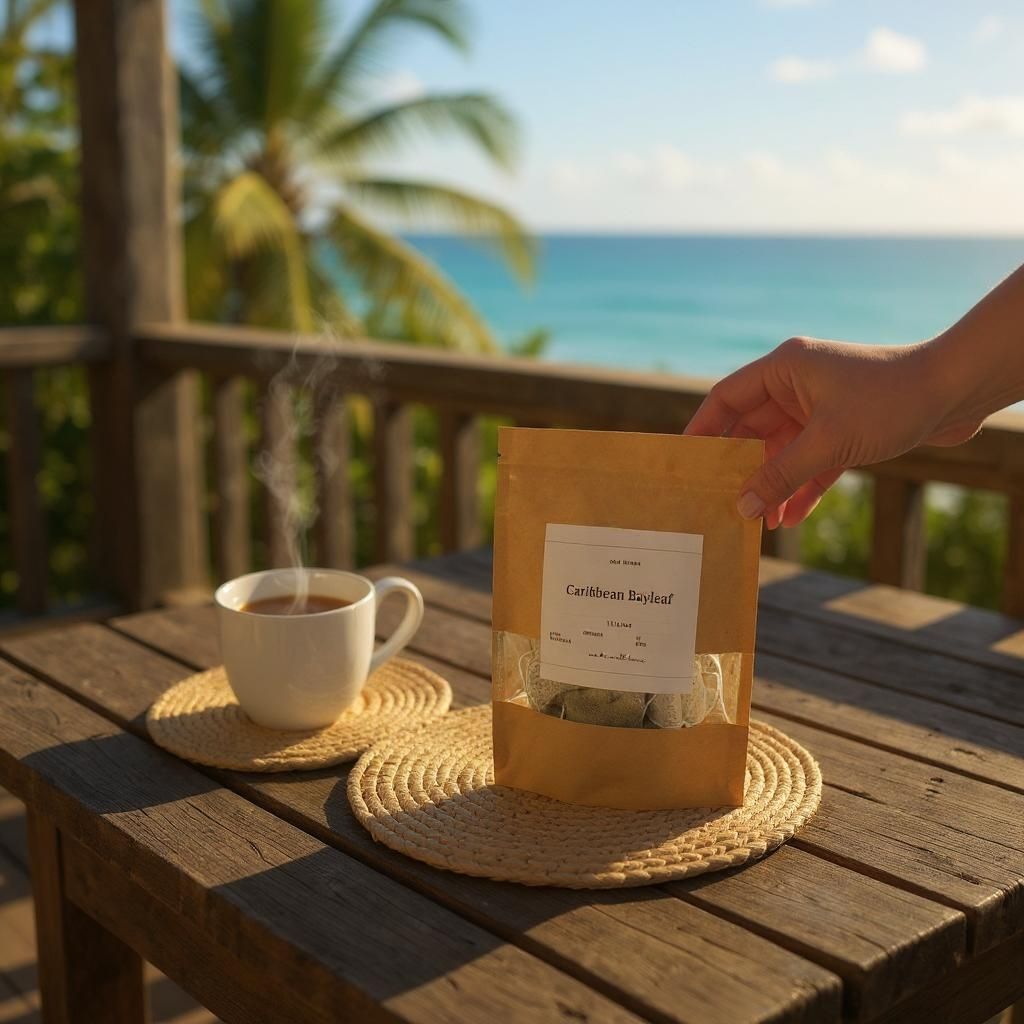
A warm bay leaf and cinnamon drink brings together an earthy herbal infusion and a small amount of familiar kitchen spice. Start with K&M Caribbean Bay Leaf Teabags and a food-grade cinnamon stick, keeping the recipe simple enough to adjust. This is a suggested home serving idea, rather than a pre-blended product or a claim about a traditional family recipe.
Using the labelled tea avoids guessing which leaves to put into the pot. Caribbean bay leaf tea and the bay leaves in a kitchen cupboard should not automatically be treated as interchangeable. Choose the named tea product and follow the information supplied with it.
What do you need for two small servings? Set out two K&M Caribbean Bay Leaf Teabags, 500 ml of freshly boiled water and one small food-grade cinnamon stick. A little of your usual suitable sweetener is optional. These quantities are a starting recipe for two modest cups, rather than a guarantee that every person will prefer the same strength.
You will also need a clean teapot or other brewing vessel intended for boiling water, two cups and a way to remove the cinnamon. Check that the vessel holds the ingredients with room below the rim. An ordinary decorative jug is not automatically suitable for hot preparation.
Prepare the bay leaf tea Put the tea bags in the brewing vessel and pour over the freshly boiled water. Add the cinnamon stick and set a timer. K&M's current bay leaf directions suggest a five-to-ten-minute infusion; use the instructions on your own packet if they have changed.
Begin at the shorter end of the permitted range if you want a gentler first trial. Do not shorten a required brewing time simply to make the drink lighter. You can adjust the finished serving with a little extra water once the tea is prepared.
Keep the cinnamon easy to control Use a whole stick rather than a generous spoonful of ground cinnamon for this first version. A stick is easy to remove, while ground spice can leave particles in the cup. This is a practical recipe choice, not a promise that one type will suit every drinker.
If the cinnamon aroma seems strong, remove the stick while allowing the tea to finish its instructed brewing time. You do not have to leave every ingredient in for an identical duration. On your next attempt, a smaller piece can help keep the bay leaf flavour more noticeable.
Remove the ingredients and taste When brewing is complete, remove both tea bags and the cinnamon stick. Pour into the two cups, using a suitable strainer if needed to catch any loose fragments. Let the drink reach a comfortable sipping temperature before judging the flavour.
Try it plain before adding sweetness. If you want a little sweetener, add a small measured amount to your own cup, stir and taste again. Keeping additions separate is useful when two people have different preferences, and avoids sweetening the whole pot unnecessarily.
What if the first attempt is too strong? Add a small amount of water to a tasting portion and compare it with the original cup. If you prefer the diluted version, record the approximate amount. This tells you more than changing the tea quantity, cinnamon size and brewing time all together on the next attempt.
If cinnamon dominates, reduce that ingredient next time rather than trying to cover it with extra sweetness. If you want a clearer idea of the bay leaf itself, prepare a separate plain cup according to the packet and compare the two on another occasion.
Serve it as a simple freshly prepared drink Explain the ingredients when offering it to someone else: Caribbean bay leaf tea, cinnamon and any optional sweetener. Keep the original packet available for anyone who wants to check the product information. The appeal is the warm, aromatic flavour, without promises about treating symptoms or changing health.
Make the amount you intend to serve and enjoy it freshly prepared. Once you find a balance you like, write down the cinnamon size, water quantity and brewing time. That short note will help you repeat a pleasant cup without turning a straightforward recipe into a complicated routine.
Read our Caribbean and cooking bay leaf comparison.
Questions? Contact K&M Herbs or email info@km-herbs.com.