
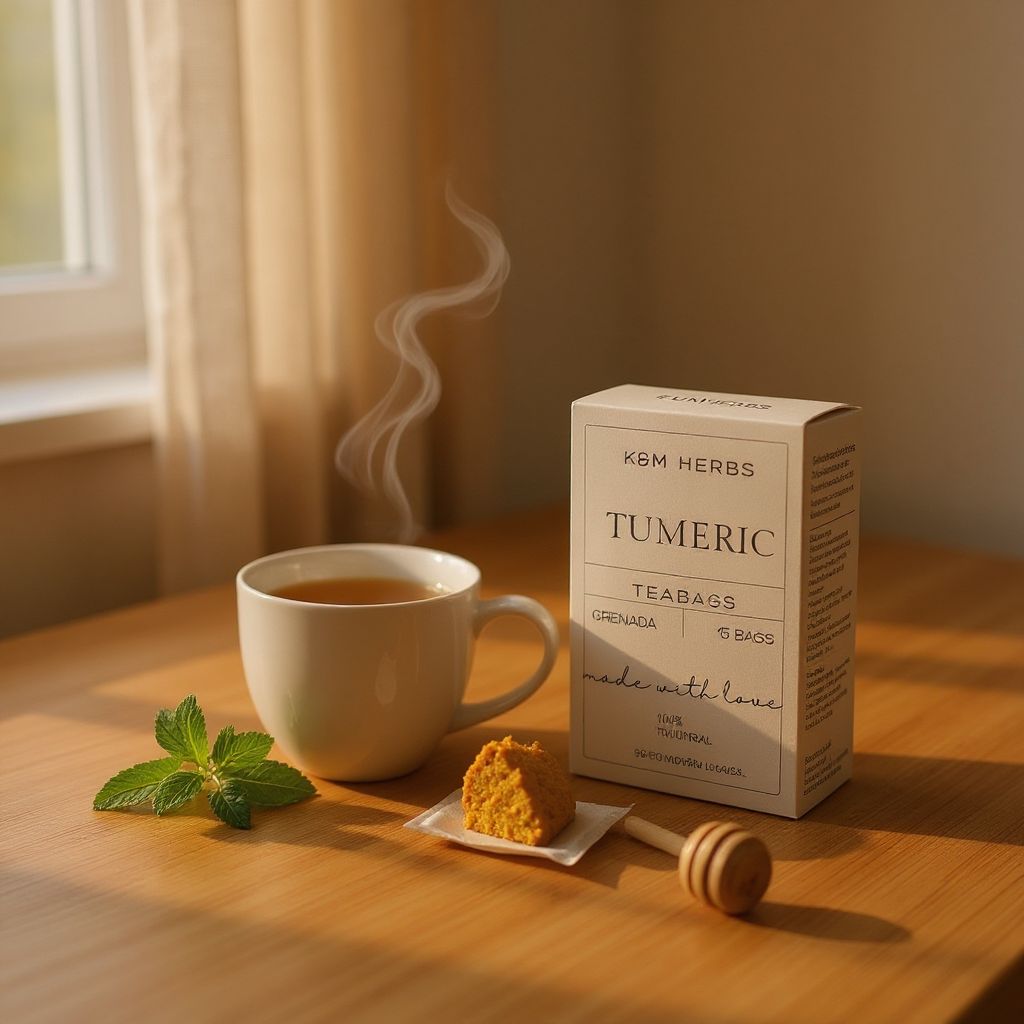
Ginger tea and turmeric tea come from different ingredients and have different flavour profiles. They are often grouped together in warming drinks, but knowing what each contributes helps you choose a cup or build a recipe more deliberately.
What ginger contributes
Ginger commonly brings a lively, peppery warmth with a bright edge. The impression changes with the form used, the quantity and any other ingredients. A ginger-and-lemon blend is not the same comparison as a plain ginger infusion.
Fresh ginger in a saucepan and a packaged ginger tea may also produce different results. Read the ingredient list and use the directions intended for that product.
What turmeric contributes
Turmeric is often described as earthy, woody or gently bitter. Its colour can be much stronger than its apparent flavour, so a vivid yellow cup is not a measure of taste intensity. Turmeric products may contain other ingredients, and powdered turmeric behaves differently from pieces enclosed in a tea bag.
When cooking, turmeric can colour utensils and fabrics. A plain, easy-to-clean cup is practical for your first comparison.
Try them side by side
Prepare each product as directed and taste small servings plain. Write down whether you notice peppery warmth, earthiness or another impression. Add milk, coconut drink or sweetener only after the first taste if you want to explore those variations.
For a coconut-based drink, turmeric can offer an earthy counterpoint; ginger may give a more obvious peppery lift. Neither is automatically the right choice for everyone.
These are flavour comparisons, rather than promises about what a drink will do for your health. Choose the ingredients and serving style that fit the cup you want to enjoy.
Related reading: Turmeric Tea Bags: Flavour and Preparation.
Explore our free Herbal Tea Wellness Guide for more about K&M Herbs. For a product question, contact us.