
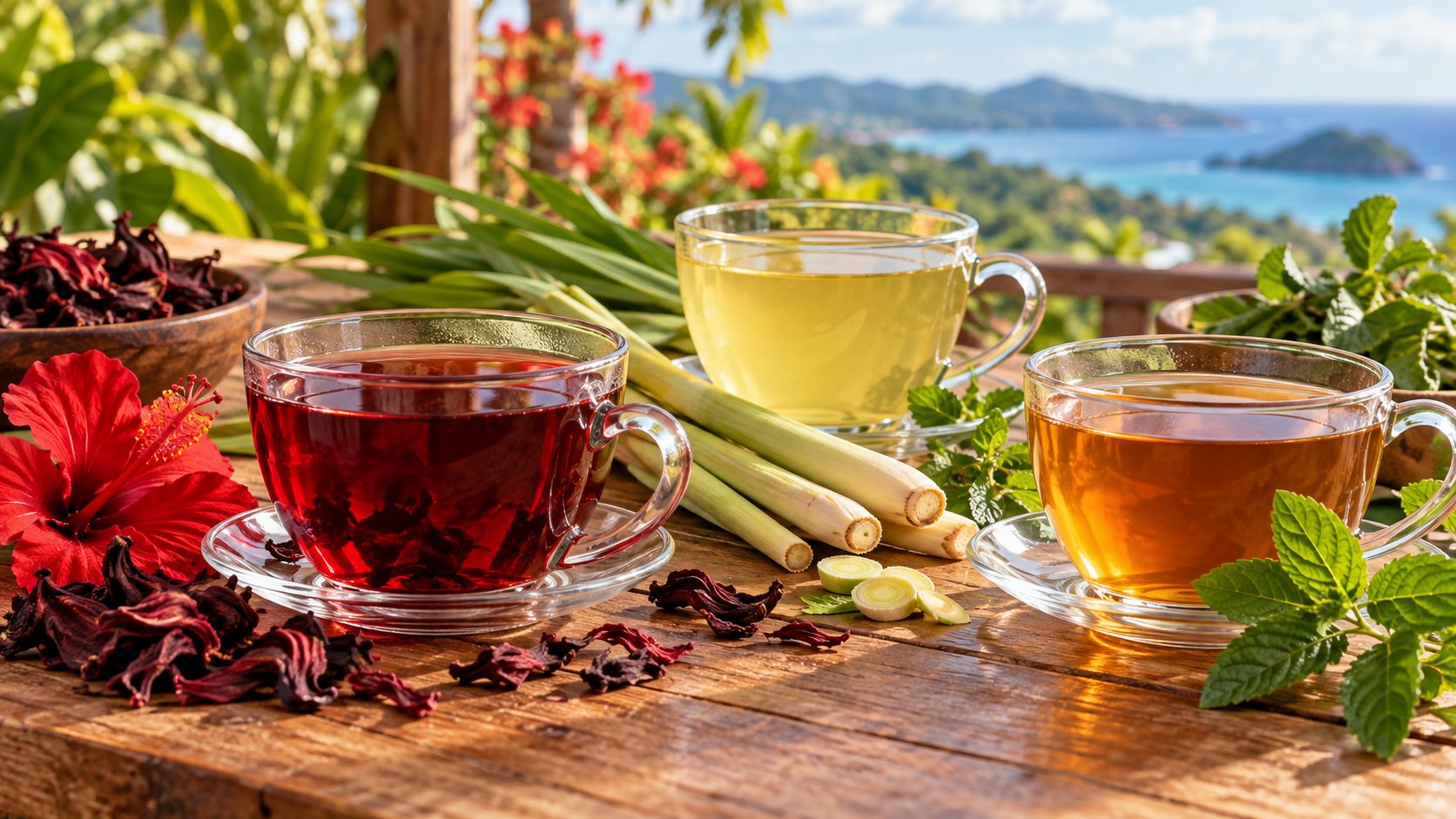
A little brewed hibiscus tea can add tartness and colour to a salad dressing. It is particularly interesting with roasted vegetables, orange and winter leaves, where a small amount can brighten richer flavours.
Mix a small dressing
Whisk together one tablespoon of cooled, strained hibiscus tea, two tablespoons of olive oil, one teaspoon of cider vinegar, one teaspoon of honey or maple syrup and half a teaspoon of Dijon mustard. Add a pinch of salt and taste before dressing the salad.
Prepare the tea according to its packet. If it has a gentle flavour, begin with less vinegar and adjust at the end. Hibiscus contributes its own tartness, and the best balance depends on both the tea and the food underneath it.
Build a winter salad
Try roasted squash, orange segments and mixed leaves. Allow hot vegetables to cool a little before adding delicate leaves. Toss with just enough dressing to coat, then offer the rest separately.
Beetroot gives another direction, while toasted seeds add crunch. Check the ingredients of mustard and any toppings when serving guests with allergies. The dressing itself does not need a complicated collection of extras.
Keep the texture in mind
Tea is a water-based ingredient, so the dressing may separate after standing. Shake or whisk again before serving. Add liquid gradually: more tea is not automatically more flavour once it has diluted the rest of the mixture.
Make a fresh quantity for your meal and refrigerate any reserved portion promptly in a clean covered container. This is a salad dressing to use fresh, not a preserved condiment for the cupboard.
Related reading: How Can You Make a Warm Hibiscus and Orange Drink?.
Explore our free Herbal Tea Wellness Guide for more about K&M Herbs. For a product question, contact us.