An infusion and a decoction are two ways of preparing plant ingredients in water. The main difference is how heat is used: an infusion usually involves steeping, while a decoction involves simmering the ingredient in water for a period of time.
What happens during an infusion?
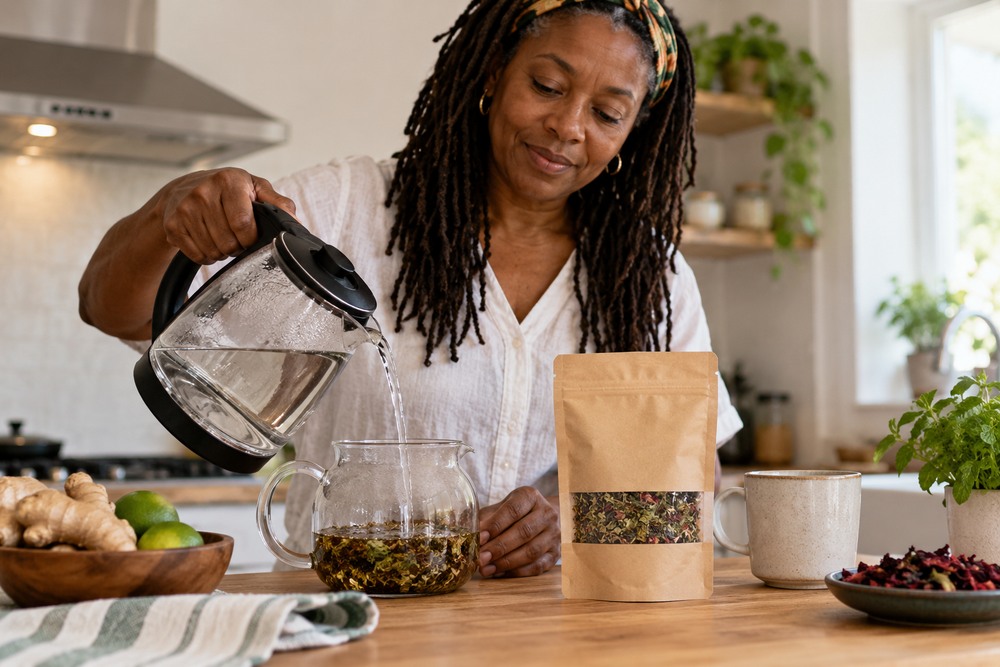
For a familiar example, think of preparing a herbal tea bag in a cup. Water is added, the ingredient steeps, and the bag is removed. The packet should tell you the appropriate temperature, time and quantity for that particular product.
Leaves and flowers are often associated with infusion methods, but the plant part alone is not a complete set of instructions. Cutting, drying, blending and the intended product all influence preparation.
How is a decoction different?
A decoction keeps the plant material in heated water during simmering. Some traditional preparations use this method with tougher ingredients, such as certain roots or bark. It is not simply another word for leaving a tea bag in a mug for longer.
Do not transfer a method from an unfamiliar root recipe to every herbal tea in the cupboard. A product designed for steeping may not be intended for boiling. Use food-grade ingredients with clear preparation directions.
Which method should you use?
For a packaged tea, begin with the manufacturer's instructions. If the wording is unclear, ask whether it is intended to be steeped or simmered, and whether any plant material should be removed before serving.
Keep brewing equipment separate from assumptions about strength. A long simmer is not automatically a better way to prepare a drink. Choosing the method that suits the actual ingredient helps you make a cup you can repeat and enjoy.
Related reading: What Is a Herbal Infusion? A Simple Explanation.
Explore our free Herbal Tea Wellness Guide for more about K&M Herbs. For a product question, contact us.