
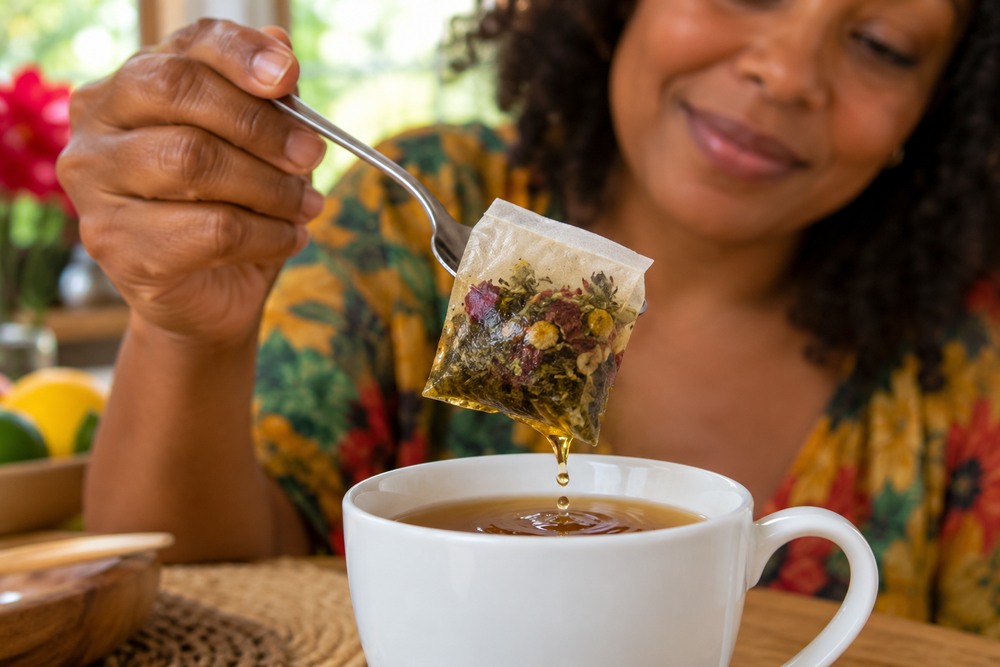
A floating tea bag does not necessarily mean the tea is faulty or that it cannot brew. Dry plant material and air trapped in the bag can keep part of it near the surface at first. What matters is whether the contents become properly wet during the recommended preparation.
Give it room to open
Choose a cup with enough space for the bag. Pour the water carefully, following the product's directions, and allow the bag to wet through. A bag wedged tightly inside a tiny infuser may have less room than one sitting freely in a mug.
You can gently move the bag with a clean spoon if part remains dry. There is no need to press it hard against the bottom or stir continuously. Keep your hands away from hot water and do not pull a paper tag into the drink.
Does dunking make a difference?
Moving the bag changes how water passes around it, so it can change the brewing experience. For a useful comparison, make two cups of the same tea. Leave one bag alone and gently move the other once or twice. Use the same water quantity and the packet's brewing time, then compare the flavour.
This is more informative than deciding every herbal tea needs vigorous dunking. Different bag materials, shapes and ingredients do not all behave identically.
Remove it when the tea is ready
Follow the preparation instructions rather than using floating or sinking as a timer. Let excess liquid drip into the cup before placing the bag on a saucer. If the bag has split, strain out the pieces and check whether it was damaged before brewing. Floating, squeezing and bag strength are separate questions.
Related reading: Should You Squeeze a Herbal Tea Bag After Brewing?.
Explore our free Herbal Tea Wellness Guide for more about K&M Herbs. For a product question, contact us.