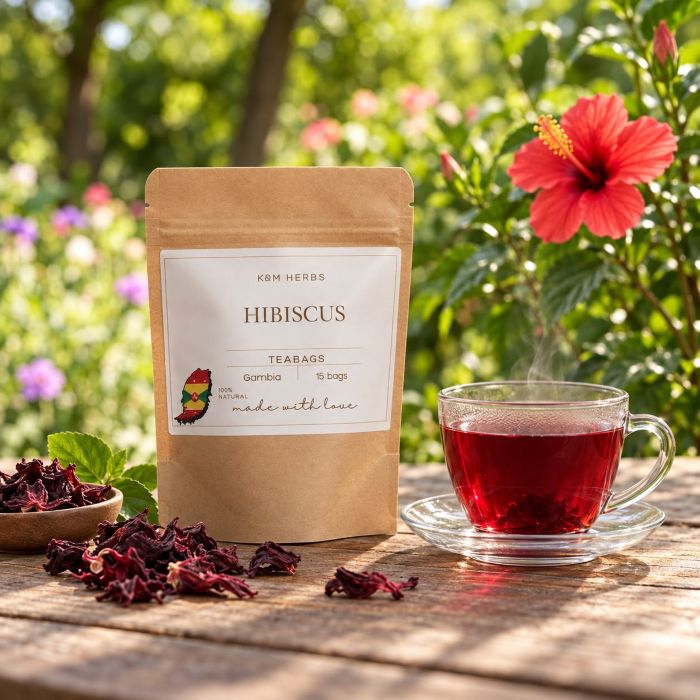
The red colour of a typical hibiscus infusion is associated with pigments called anthocyanins in the hibiscus ingredient. Colour is part of its appeal, but it is not a measure of medical benefit.
The pigments behind the colour
Research on Hibiscus sabdariffa identifies anthocyanins in its calyces and examines their contribution to colour. The calyx is the structure around the flower, rather than simply a loose petal. Tea descriptions sometimes simplify this distinction.
A cup is more than a colour chart
The amount of ingredient and water affects the appearance of a brew. A blend can contain other ingredients as well. A dark cup and a pale cup cannot be compared meaningfully without knowing what was used to make them.
Colour does not tell you everything
A photograph cannot reveal the full ingredient list, brewing method or flavour. It also cannot establish a nutritional quantity or treatment effect. The packet and product description remain the useful sources for the specific tea.
Enjoying the visual character
A clear cup or glass teapot can make the colour part of the serving experience. Our hibiscus tea and existing iced-tea guide offer ways to explore the ingredient. Follow the supplied preparation instructions rather than brewing only until a preferred colour appears.
Background reading: Research on Hibiscus sabdariffa colour and plant variation.
More from K&M Herbs
Explore our current tea and gift range and download our free herbal tea and wellness book for more about K&M Herbs.
Related reading: Iced Hibiscus Tea: How to Make It at Home.